


This guide connects a Quickchat AI Agent to an Intercom workspace so the AI answers conversations in Intercom’s Messenger and Inbox. Quickchat AI is listed in the Intercom App Store. The setup takes six steps: a dedicated Intercom teammate for the AI, a Workflow that routes conversations to it, the AI Agent configuration in Quickchat AI, the one-click connection, the Messenger on your site, and a test.
If you arrived here searching for Intercom Answer Bot or Resolution Bot: those were the names of Intercom’s earlier built-in bots. Intercom’s current AI agent is called Fin. The section How Quickchat AI relates to Fin explains how the two compare and how to keep them from answering the same conversation.
The video below walks through the same steps.
How the integration works
The Quickchat AI Agent does not run inside Intercom. It runs on Quickchat AI and talks to your workspace through Intercom’s public API:
- When a customer writes in Messenger, Intercom sends a webhook to Quickchat AI.
- Quickchat AI checks who the conversation is assigned to. By default it only answers conversations assigned to one specific Intercom teammate: the account you authenticate with in step 4.
- The AI Agent generates a reply from its Knowledge Base and settings, then posts it into the conversation as that teammate. Customers see a normal Messenger reply.
- If the AI hands the conversation off, it unassigns itself and stops replying. Your team picks the conversation up from the Inbox.
This is why the setup starts in Intercom. The AI needs its own teammate seat to reply from, and conversations need to be assigned to that seat for the AI to pick them up. It also means you control when the AI is active with ordinary Intercom tools: assign a conversation to someone else and the AI stops answering it.
1. Add a teammate for the AI Agent
In Intercom, go to Settings → Teammates and click Add new teammates.
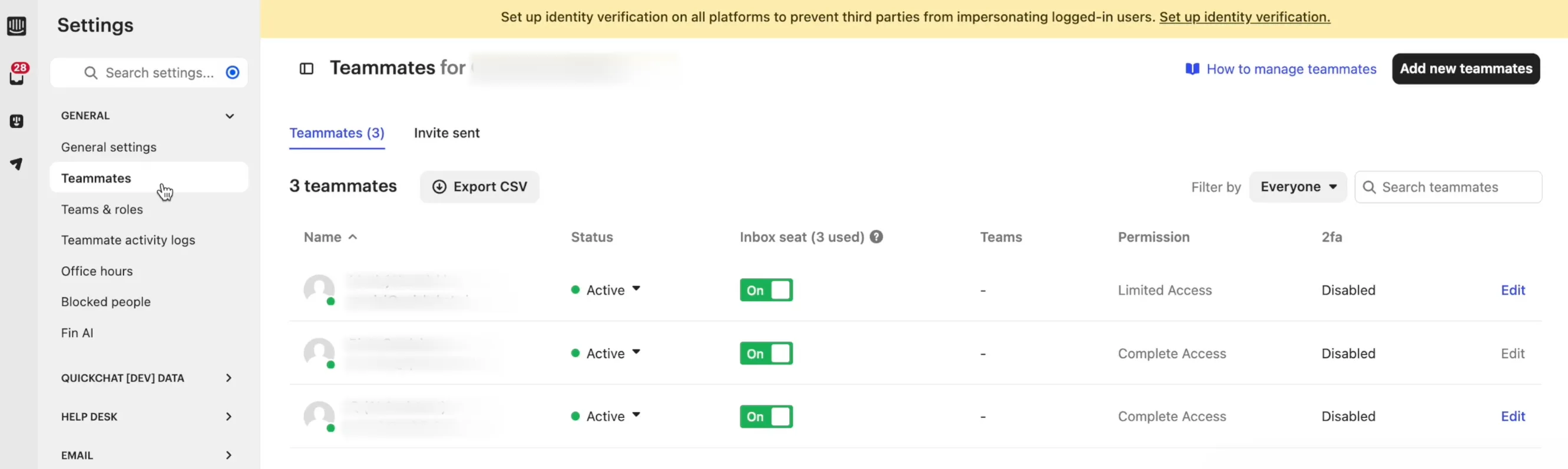
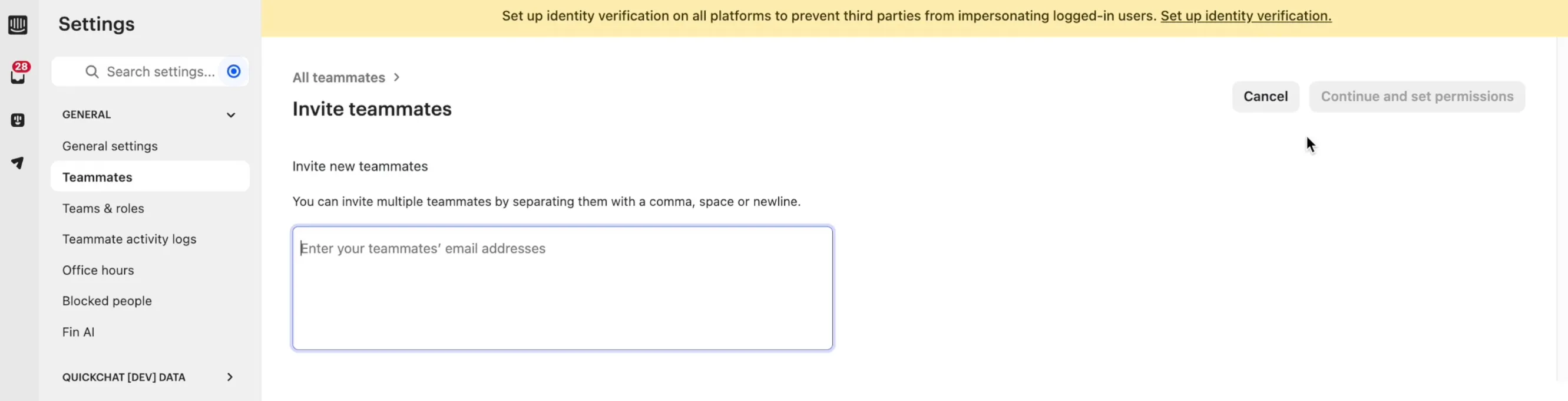
Use a dedicated email address for this teammate (for example ai-agent@yourcompany.com) and name it something your team will recognize, such as “Quickchat AI”. Customers see this name next to the AI’s replies. Enter the address and click Continue and set permissions.
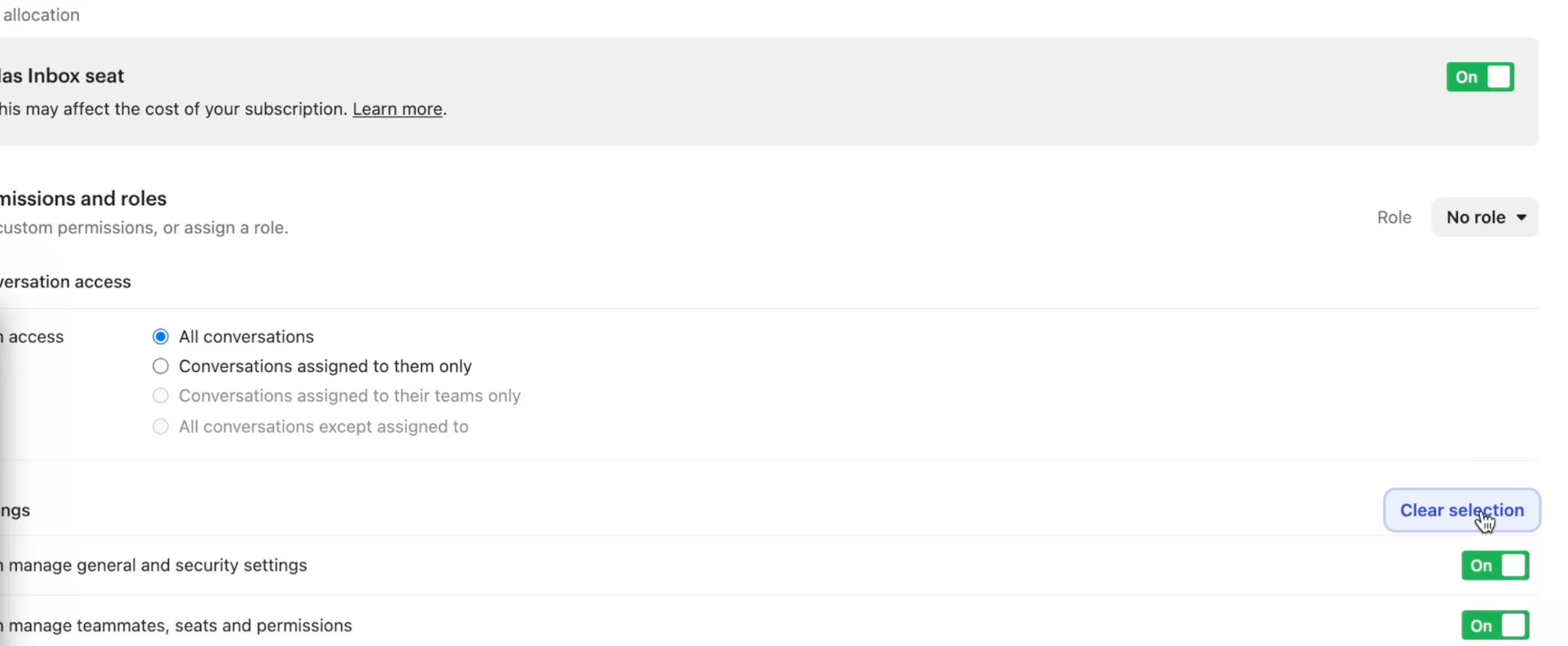
Turn on the Inbox seat. Under Conversation access, select All conversations, and enable the permissions the AI needs to reply to and reassign conversations. Then send the invite.
Log out of your own Intercom account, accept the invite from the dedicated mailbox, and log in as the new teammate. Stay logged in as this teammate until step 4 is done, because the connection in step 4 is tied to whichever Intercom account is logged in when you authorize it.
2. Create a Workflow that assigns new conversations to the AI Agent
The AI Agent only answers conversations assigned to its teammate (unless you turn on Reply to all conversations in step 4). A Workflow does the assignment automatically.
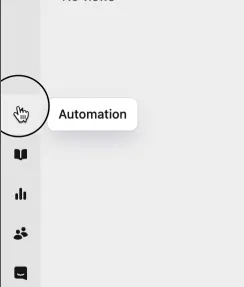
Click the lightning bolt icon in the left sidebar to open Automation.
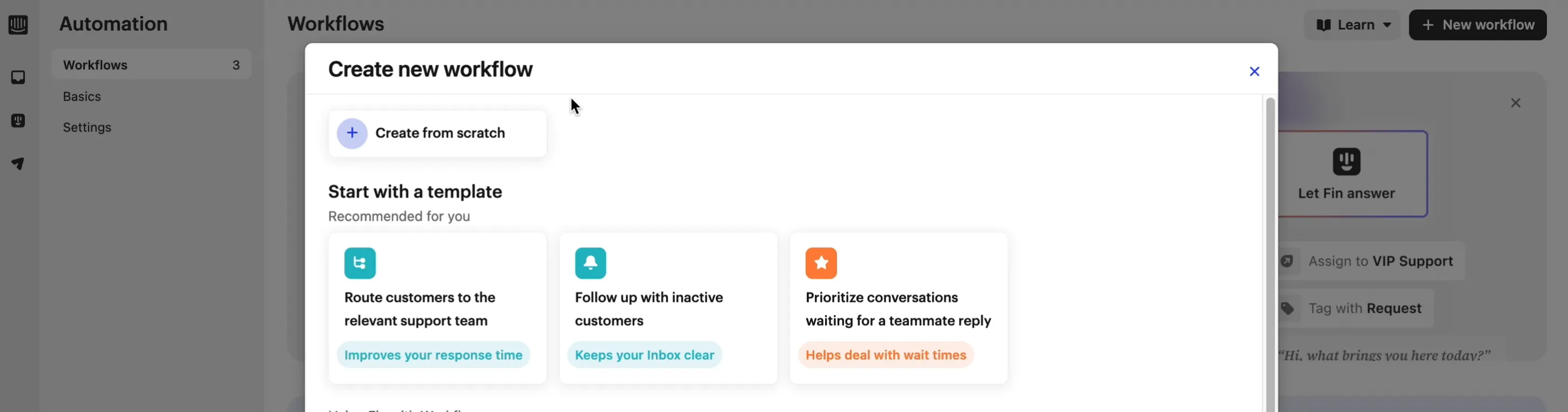
Click New workflow and choose Create from scratch.
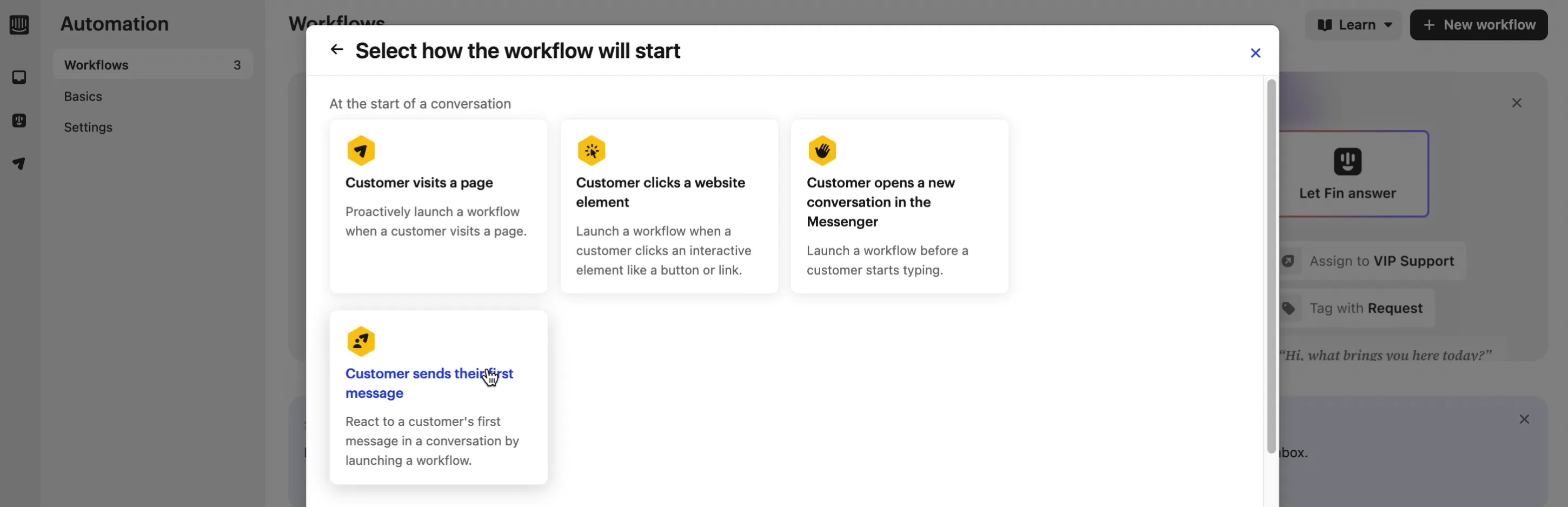
Select Customer sends their first message as the trigger.
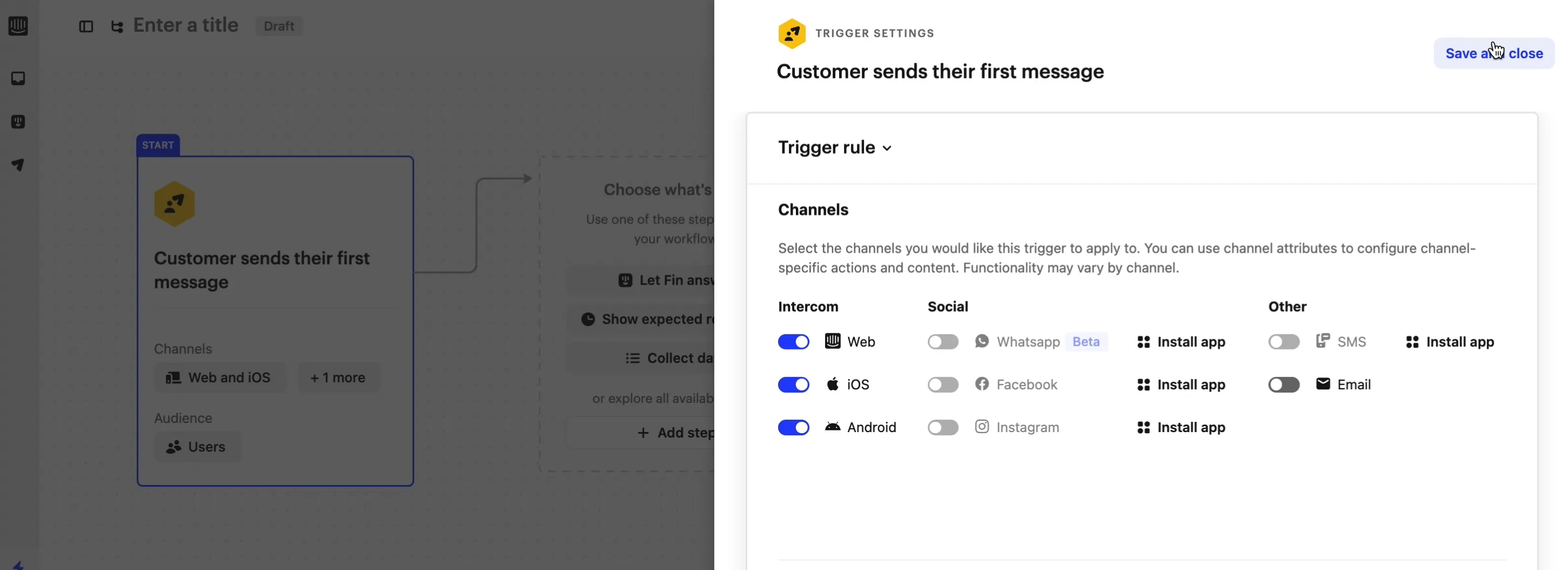
The trigger settings let you limit the Workflow to specific channels (Web, iOS, Android, and others). Keep the defaults to cover all Messenger channels, or narrow them if you only want the AI on some of them. Click Save and close.
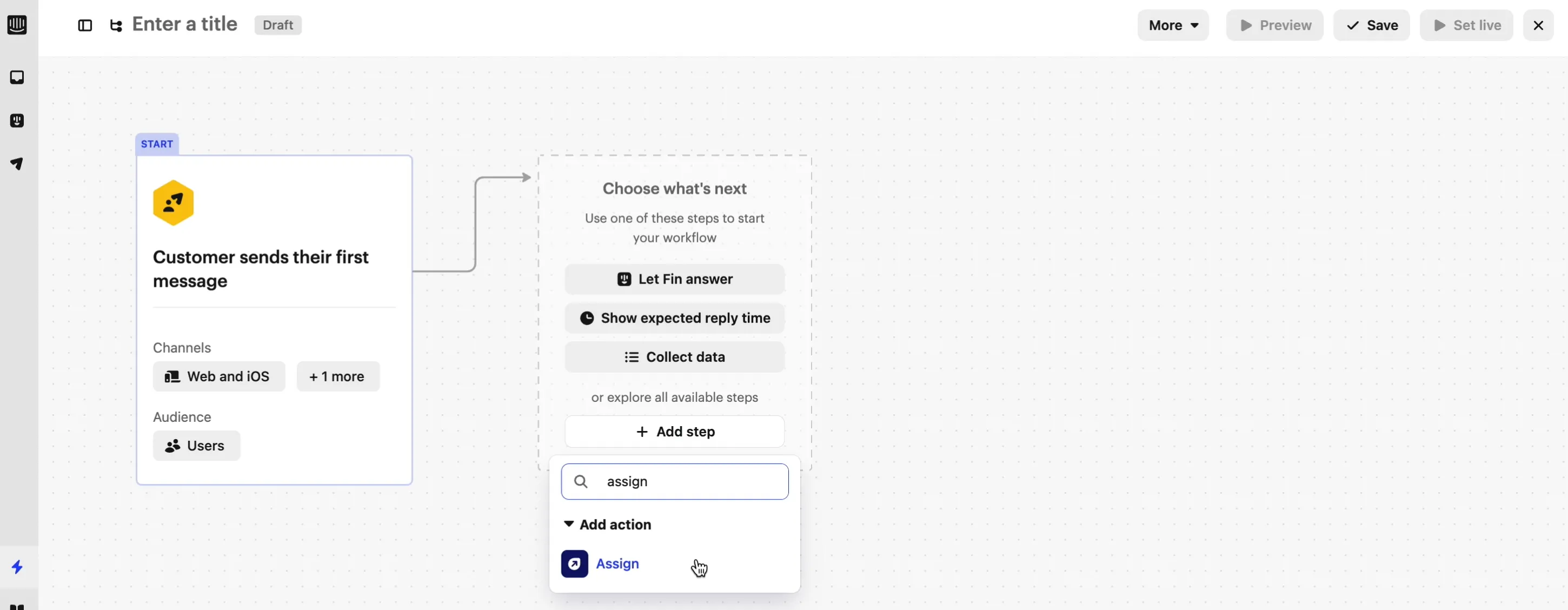
On the Workflow canvas, add a step and search for Assign. Note the Let Fin answer option in the same menu: that step hands the conversation to Intercom’s own AI agent. Don’t add it to this Workflow.
Assign the conversation to the teammate you created in step 1.
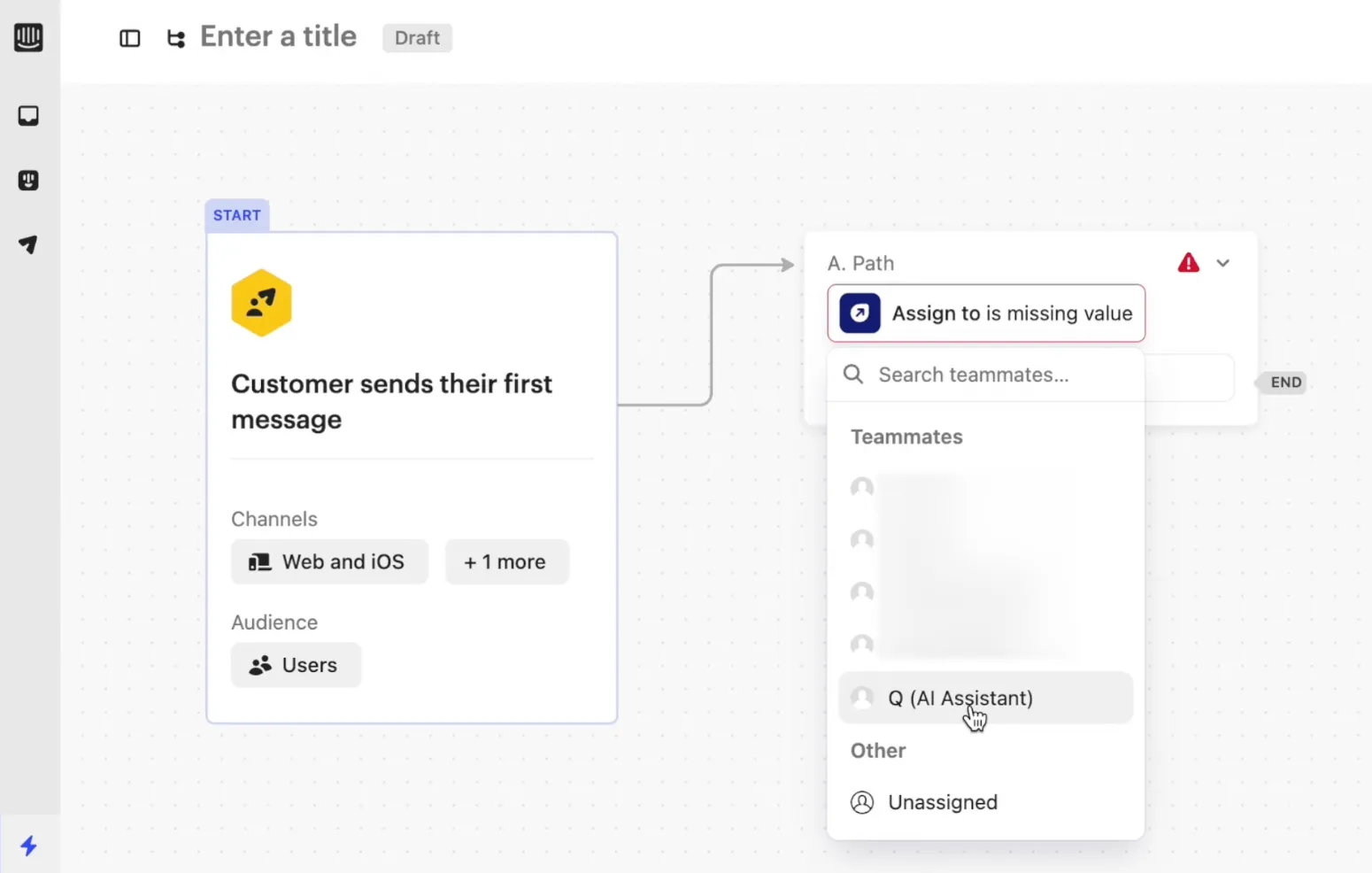
Give the Workflow a title, save it, and click Set live.
3. Configure the AI Agent in Quickchat AI
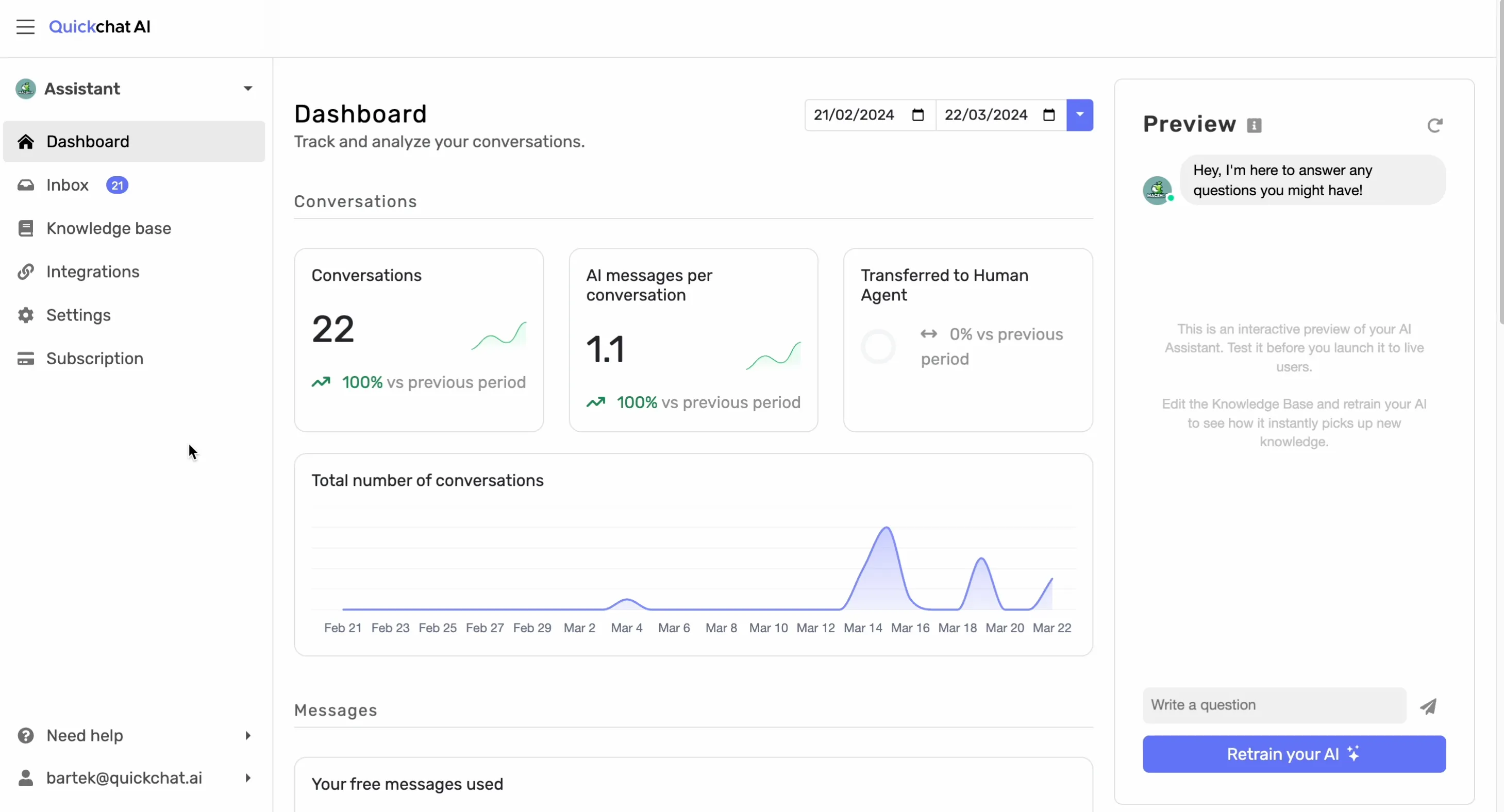
Log in to the Quickchat AI dashboard. The example in this guide is an AI Agent for an Apple products reseller called MacShop, which answers product questions and recommends products.
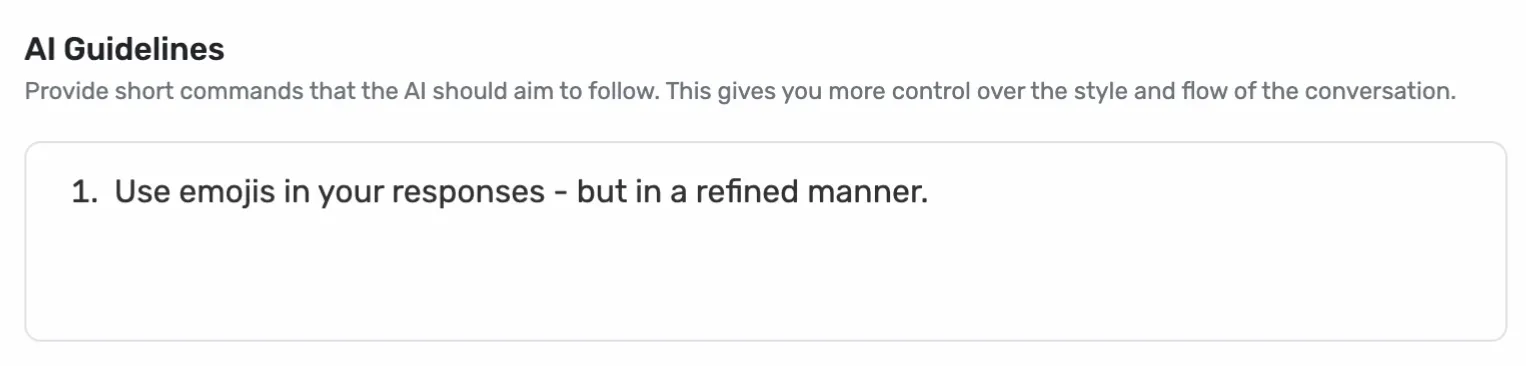
AI Guidelines are short instructions the AI follows in every conversation. To match MacShop’s casual tone, add a guideline to use emojis sparingly.
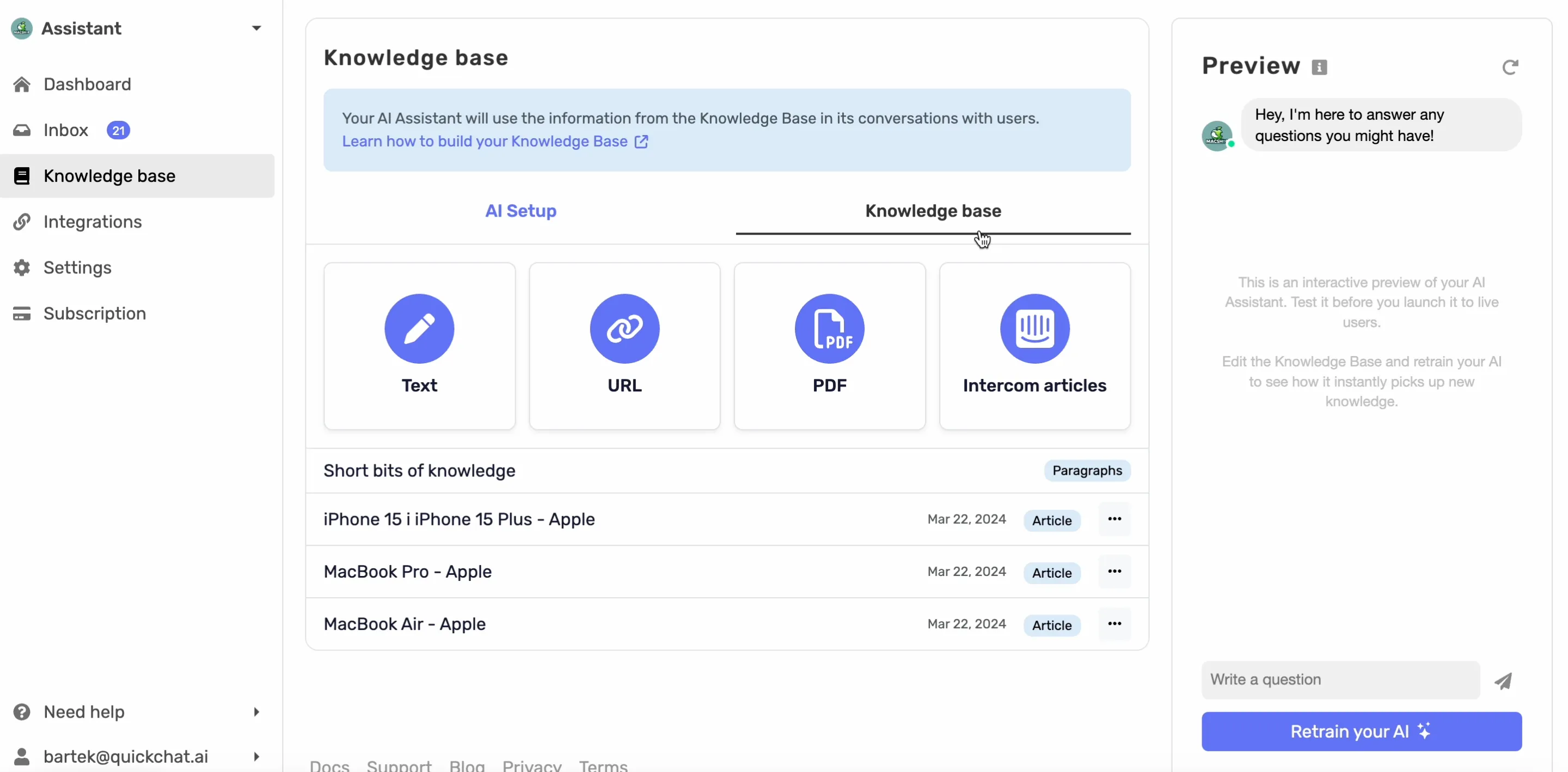
Add content to the Knowledge Base. This is what the AI Agent answers from. You can add text, URLs, and PDFs. If you already maintain an Intercom Help Center, you can import its published articles directly with the Intercom Articles source once the connection in step 4 is live. Imported articles are tagged with their collection names, and you can refresh the import later to pick up edits.
In Settings, pick an AI Personality. This example switches from the default Classic to Humorous.
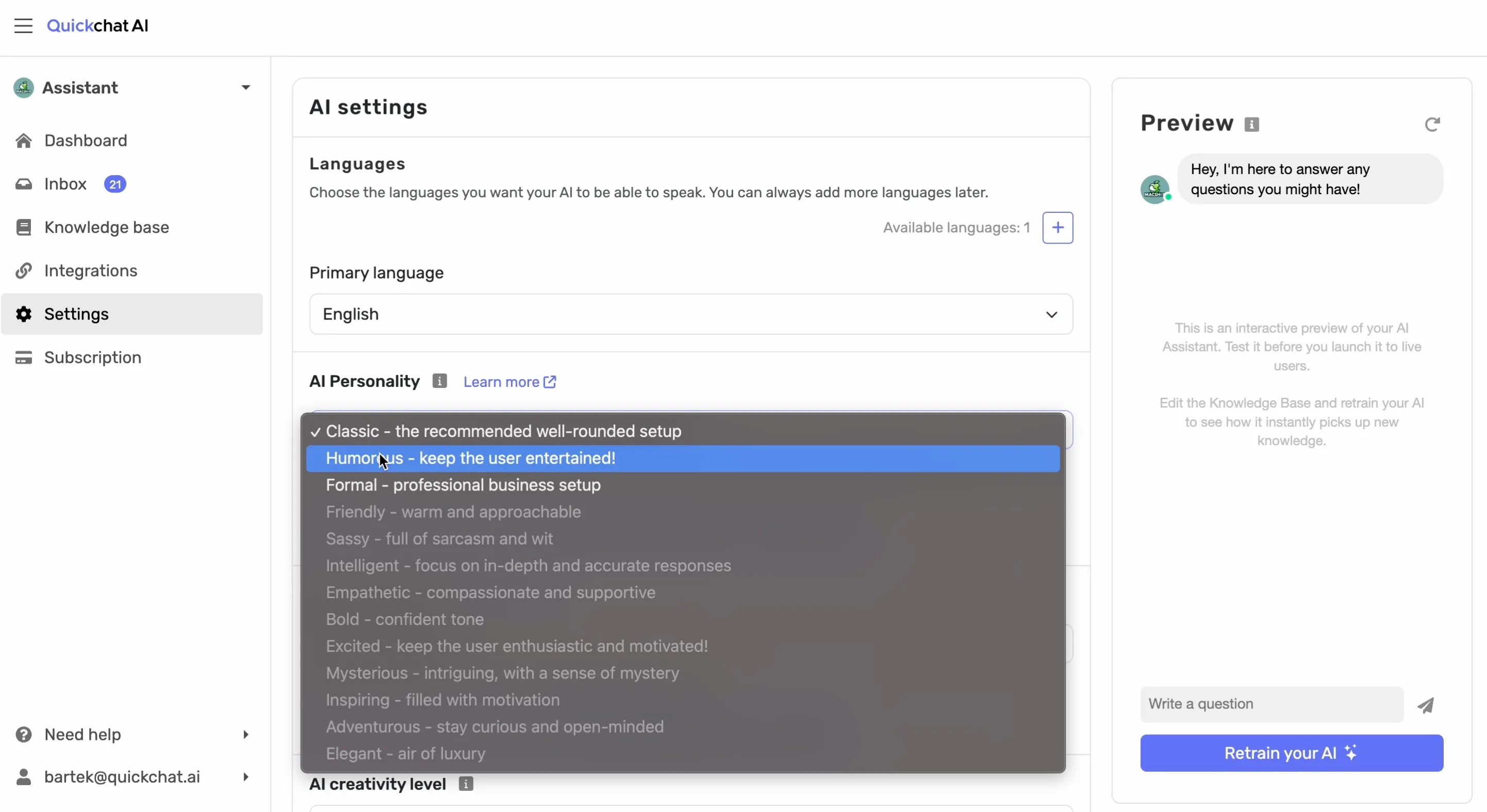
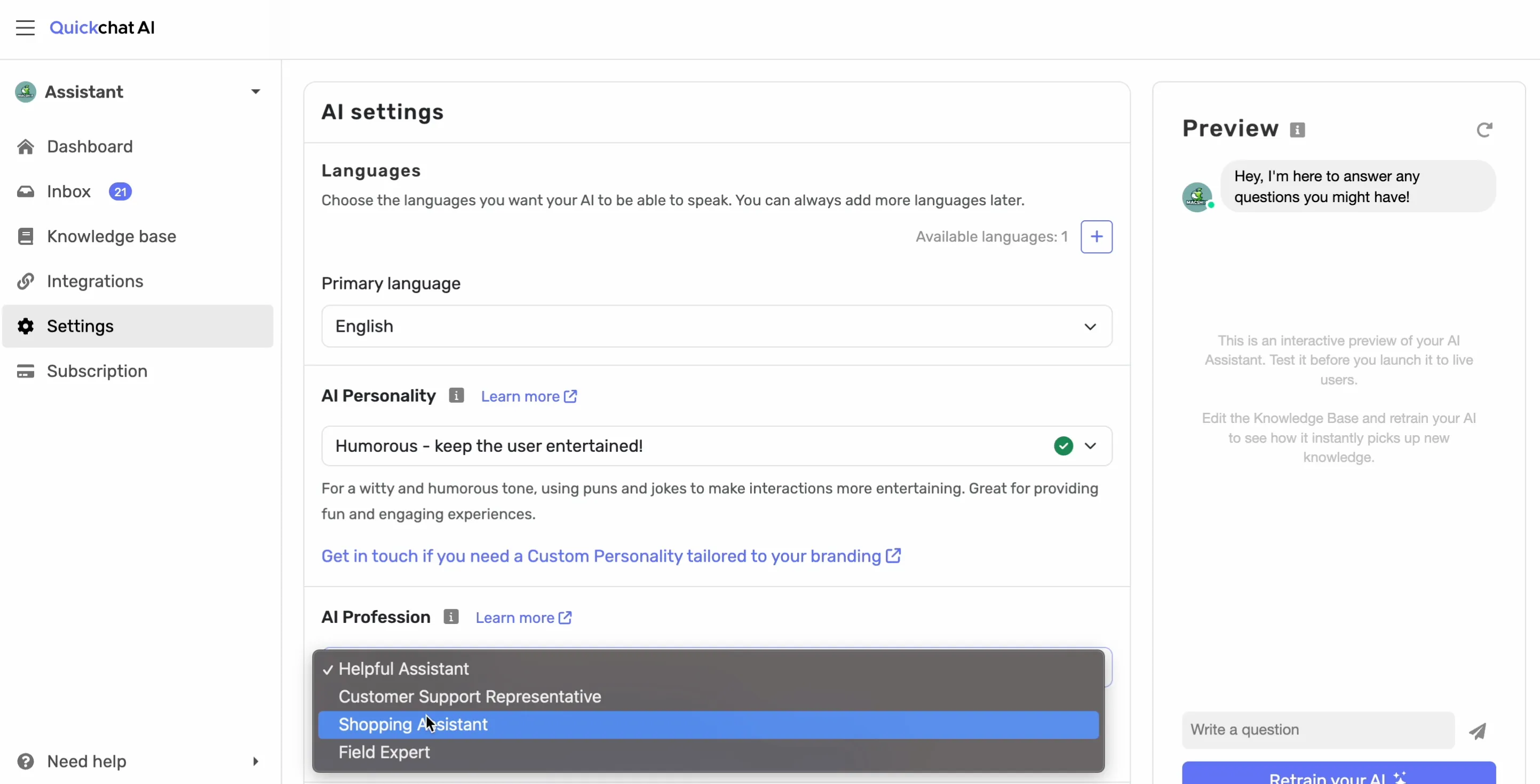
Then pick an AI Profession. Shopping Assistant makes the AI recommend products and link to product pages, which fits a store. For a support-only deployment, Customer Support Representative is the closer match.
Use the Preview panel on the right to test answers before you connect anything. Changes apply to the AI Agent immediately, including after it goes live in Intercom.
4. Connect Quickchat AI to Intercom
Make sure you are still logged in to Intercom as the AI teammate from step 1. In Quickchat AI, open Integrations, select Intercom, and click Connect with Intercom.
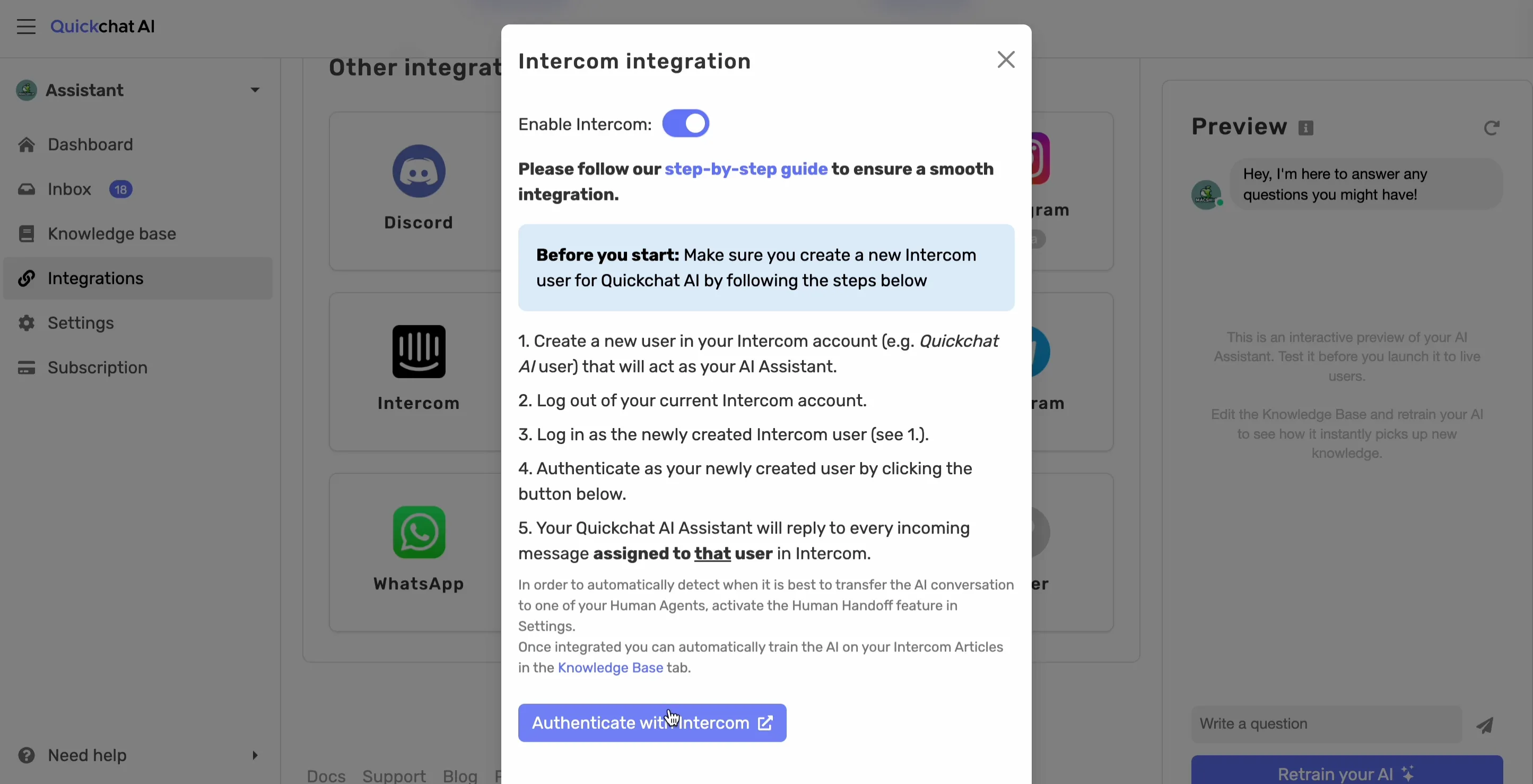
The dialog in the current dashboard looks different from this 2024 screenshot, but the flow is the same.
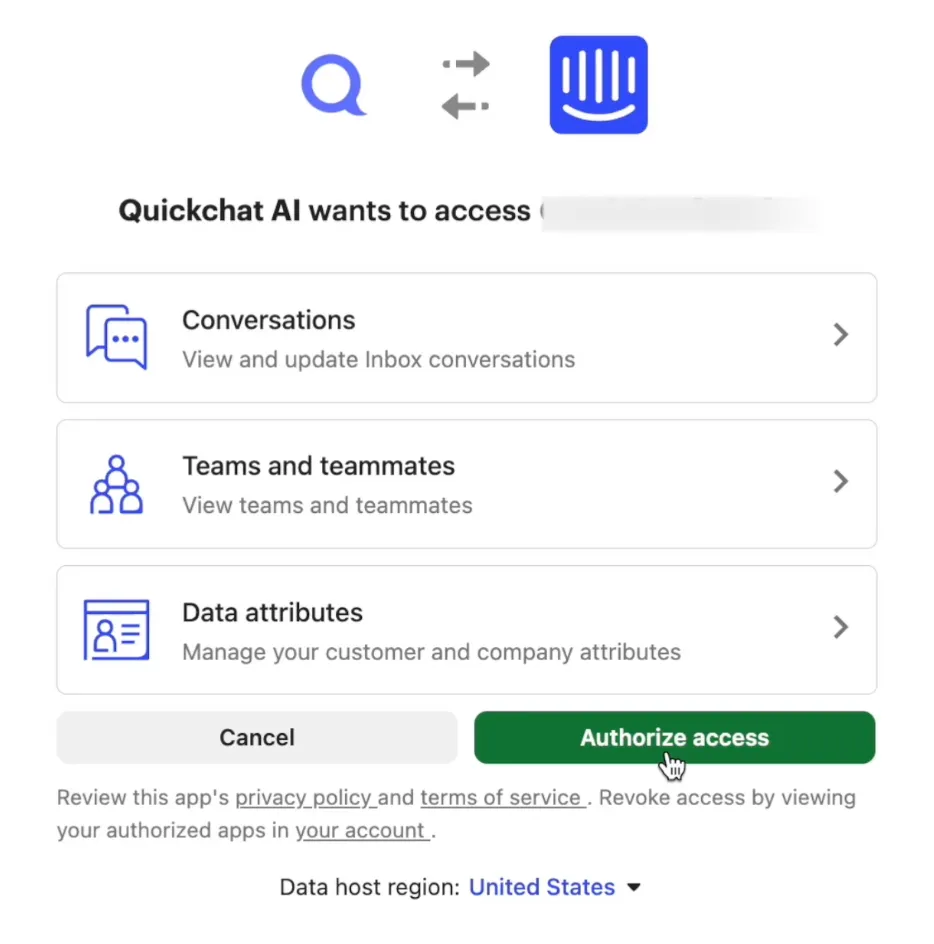
Intercom asks you to authorize the Quickchat AI app. It requests access to conversations, teams and teammates, and data attributes. Click Authorize access.
Back in Quickchat AI, the Intercom panel shows Connected as with the teammate’s name, plus the Intercom App ID and Admin ID. Click Test connection to confirm the stored credentials work. Make sure Enable Intercom is on.
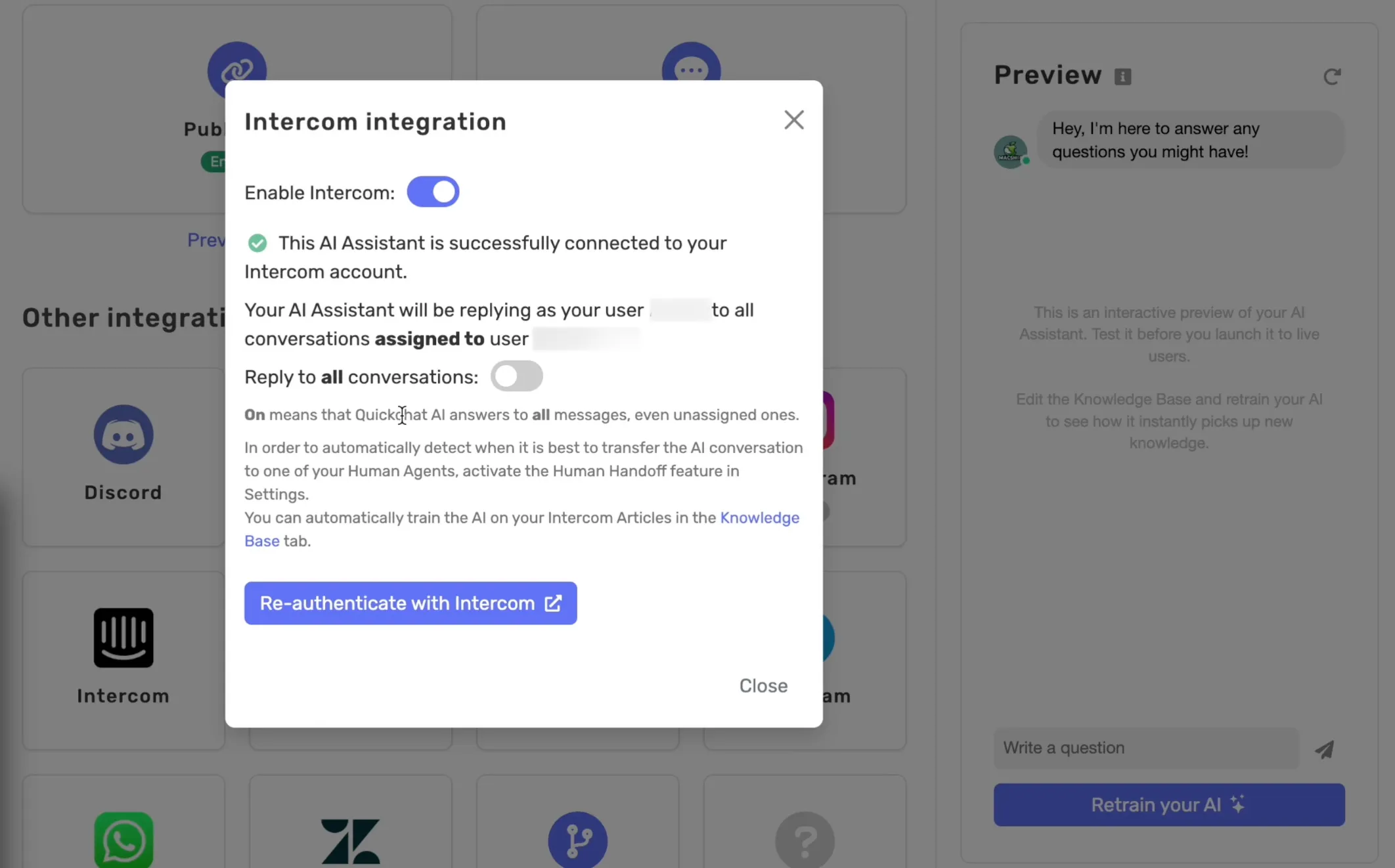
The panel has three settings that control how the AI behaves in your workspace:
| Setting | Off | On |
|---|---|---|
| Reply to all conversations | The AI only answers conversations assigned to its teammate. The Workflow from step 2 controls what it sees. | The AI answers customer messages in every conversation in the workspace, whoever it is assigned to. The Workflow is not needed. |
| Offer human handoff to Intercom admins | The AI keeps answering until the conversation is reassigned manually. | When the AI decides a human is needed (the customer asks for one, or the AI can’t answer), it unassigns the conversation and stops replying. It lands in your Inbox for a person to pick up. |
| Automatically close inactive conversations | Set to Never. Conversations stay open. | Closes conversations after 5, 10, or 30 minutes without activity, so the Inbox doesn’t fill with abandoned chats. |
Handoff works through assignment, so it behaves as described above when Reply to all conversations is off. Leave that toggle off if you use handoff or if any part of your Inbox should stay human-only. When you are done, log out of the AI teammate’s account and log back in as yourself. The connection keeps working.
5. Add the Intercom Messenger to your site
If Messenger is already installed on your site, skip this step. Nothing about the installation changes: the AI replies through the existing Messenger.
This example uses WordPress with the official Intercom plugin. Install it from Plugins if you don’t have it, then open Settings → Intercom.
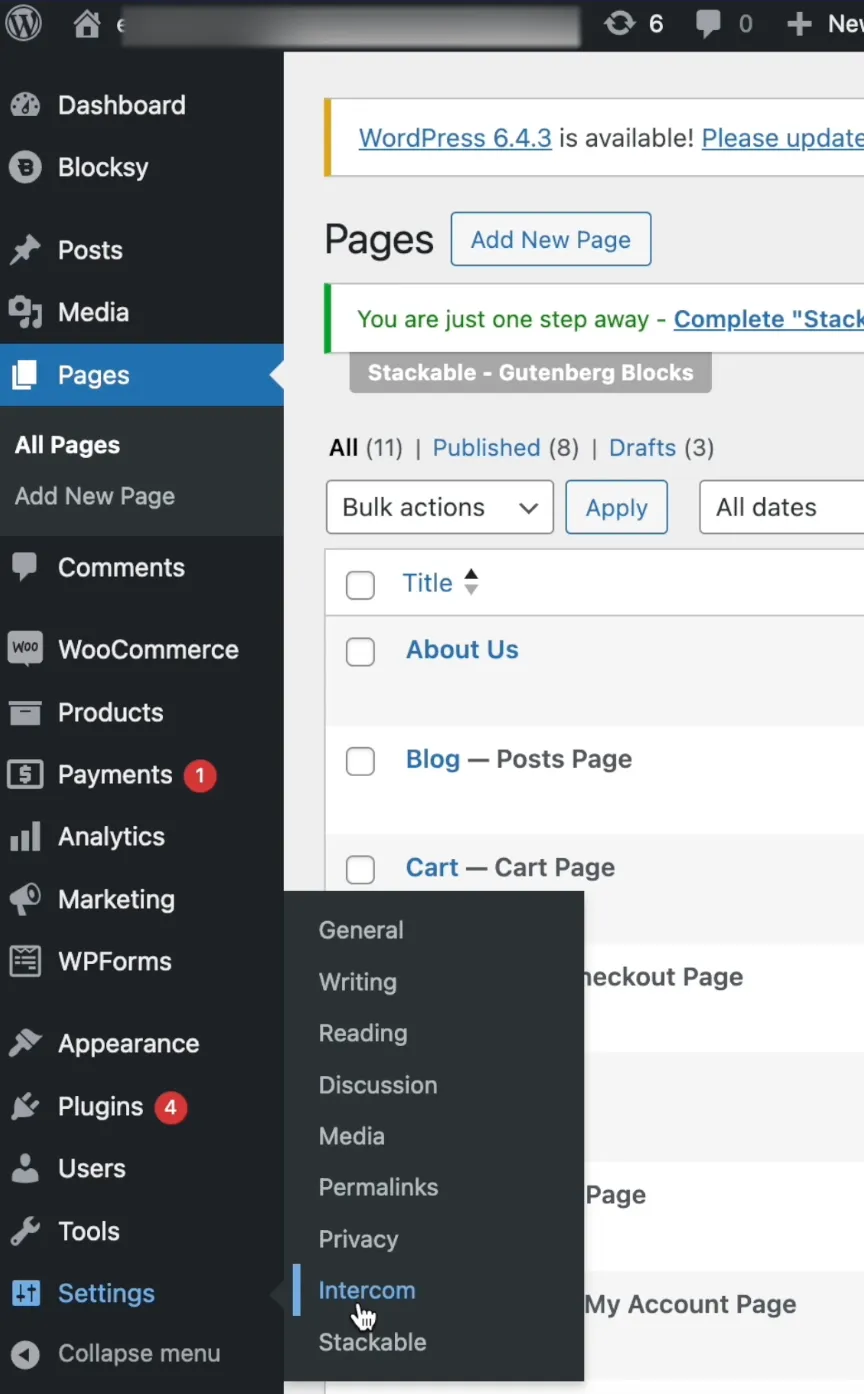
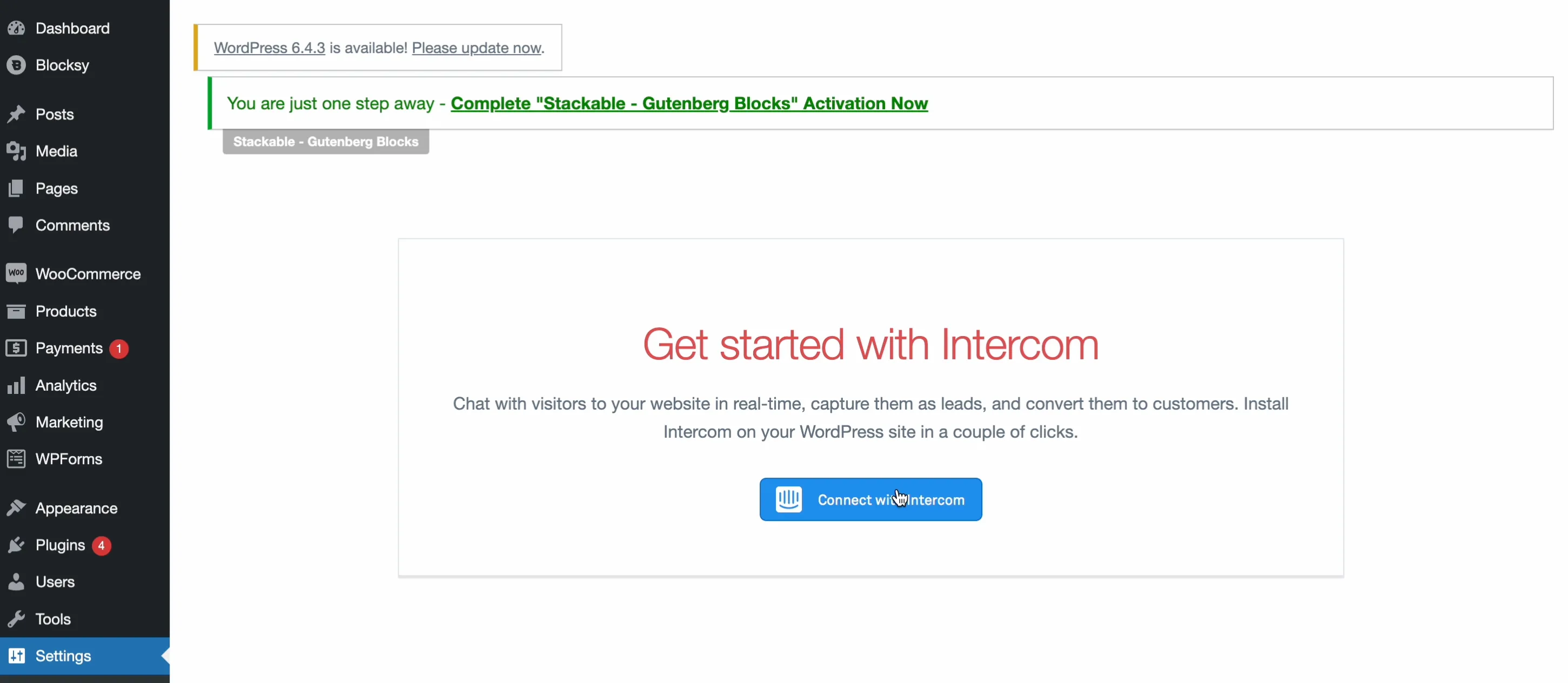
Click Connect with Intercom and authorize the plugin.
For other sites, copy the Messenger installation snippet from Intercom’s settings and add it to your pages’ HTML.
6. Test the integration
Open your site and send a message in Messenger.
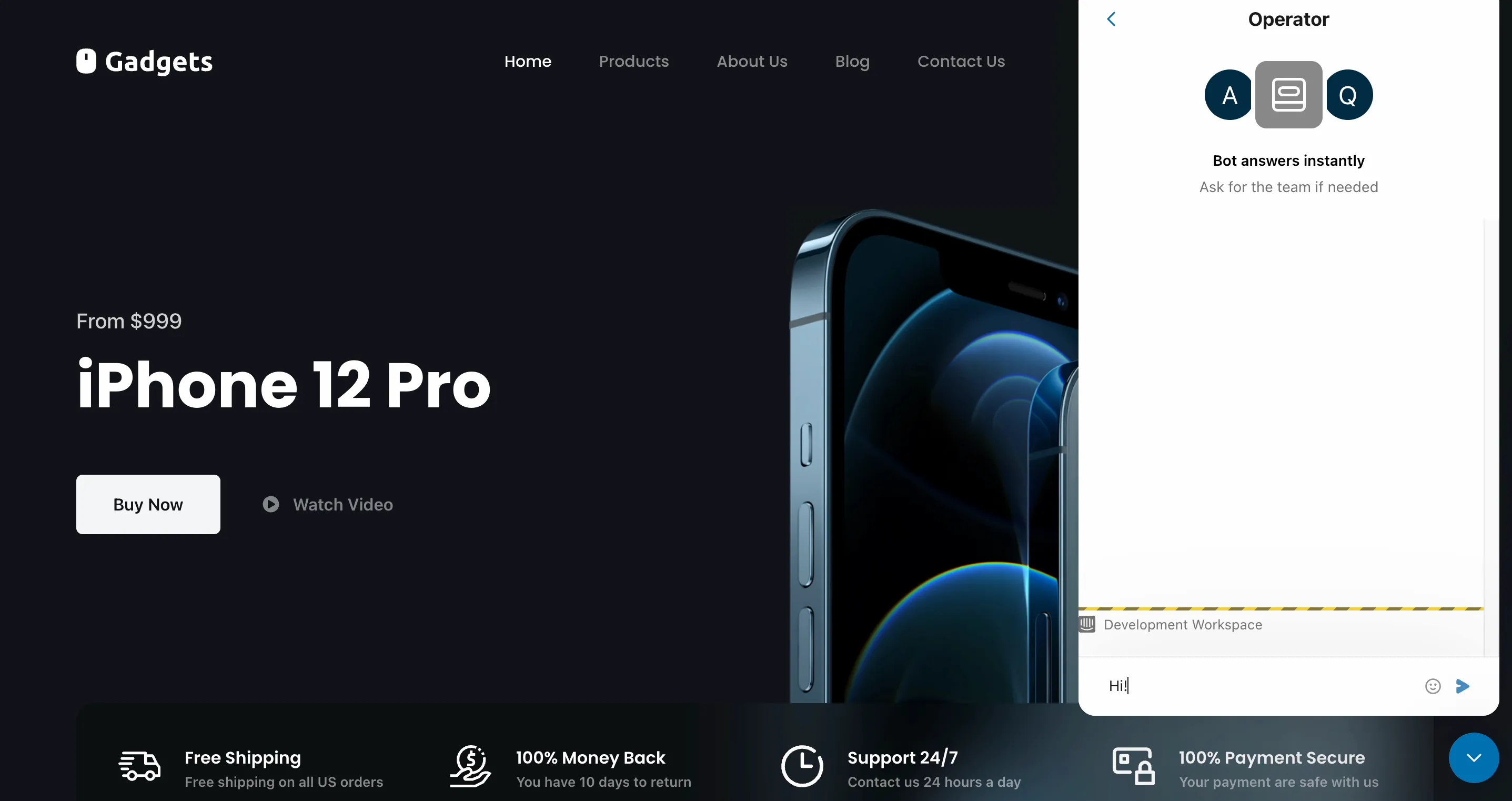
The reply comes from the AI teammate and references the MacShop Knowledge Base right away.
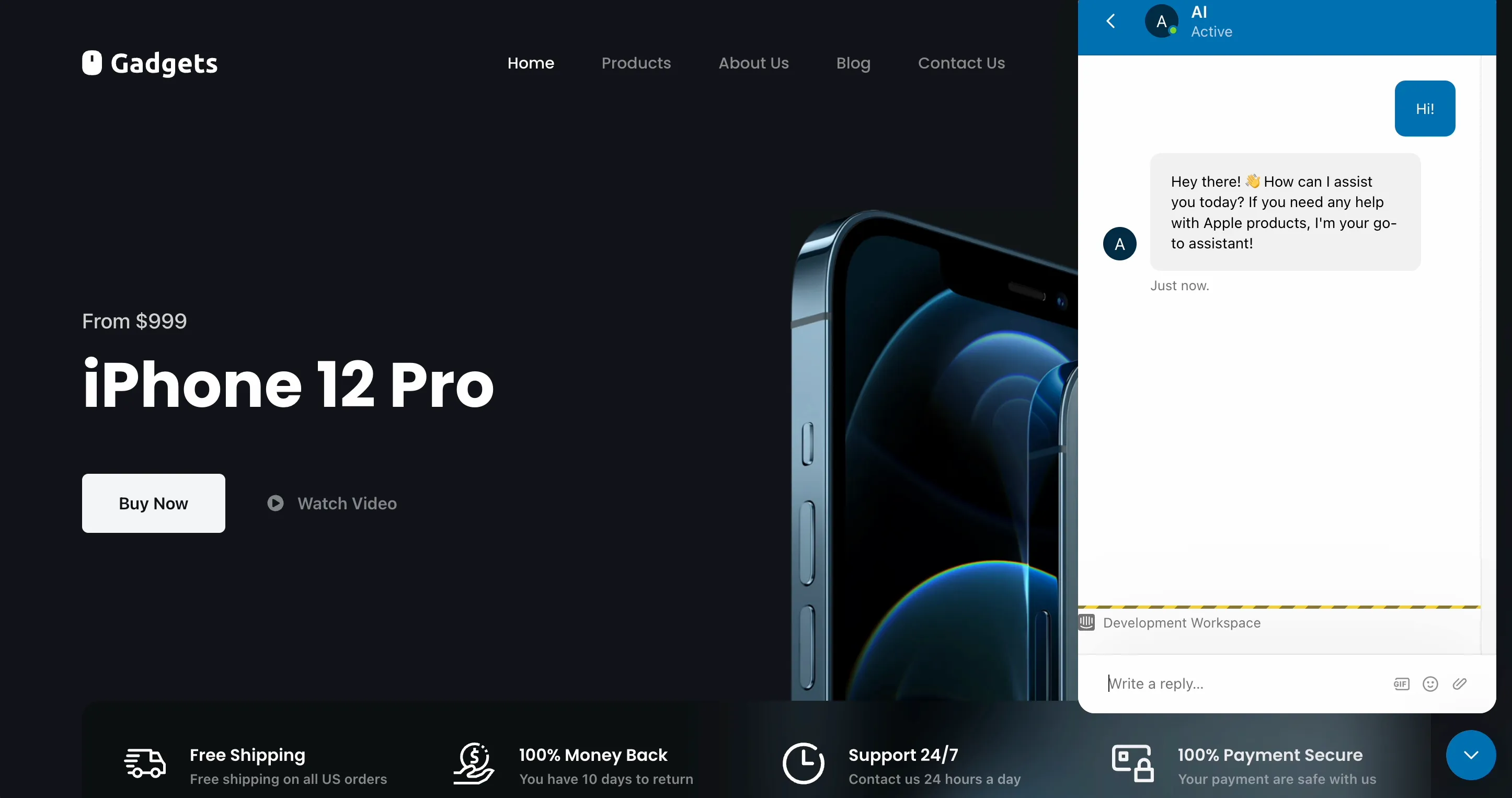
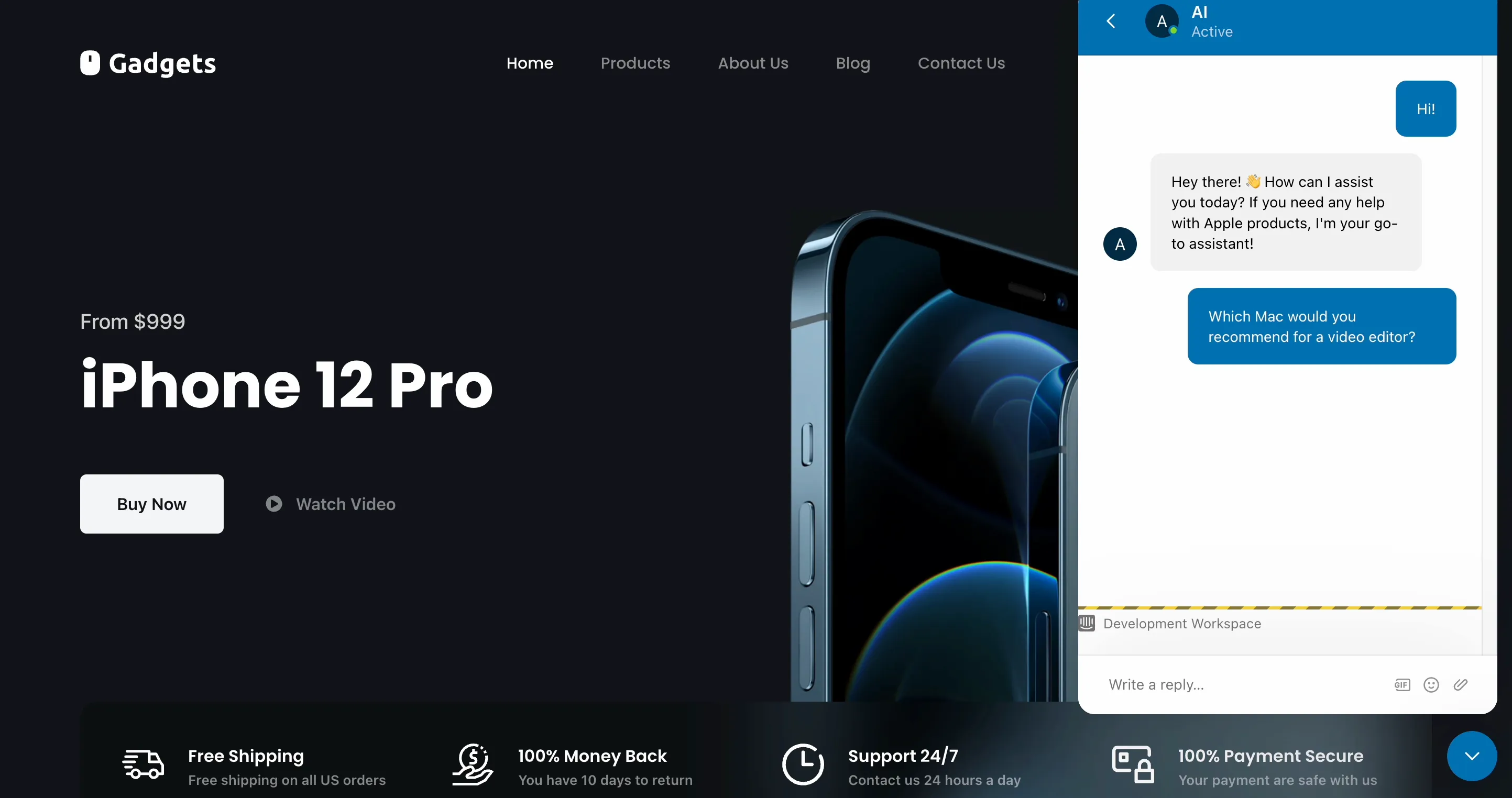
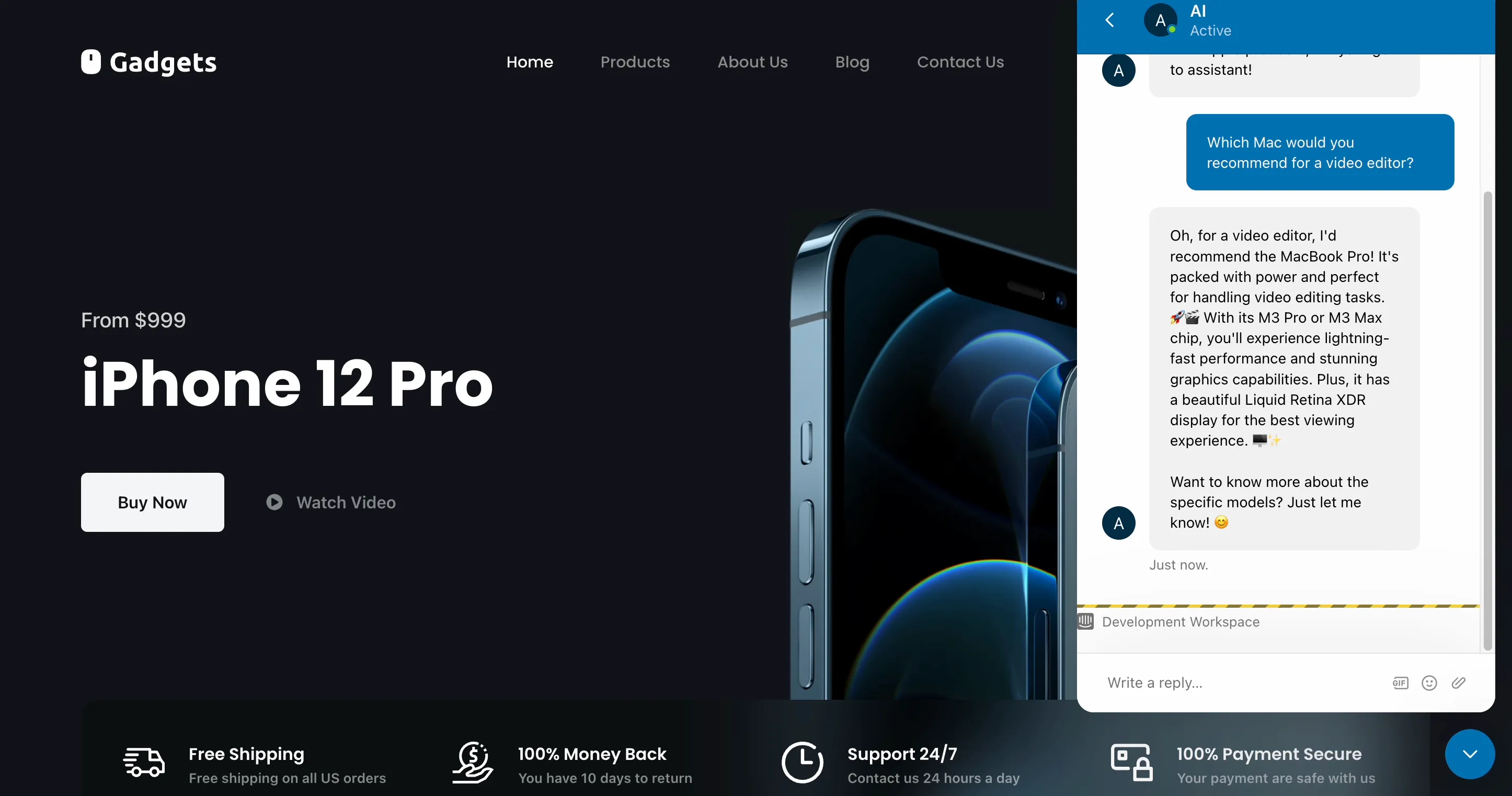
Ask a real question, for example Which Mac would you recommend for a video editor?
The answer recommends a MacBook Pro, explains why (performance, graphics, display), and follows the emoji guideline from step 3.
Things worth checking before you go live:
- Assignment. Open the conversation in the Intercom Inbox and confirm it is assigned to the AI teammate. If the AI doesn’t reply, the Workflow is usually not live or is assigning to a different teammate.
- Handoff. If you turned on human handoff, ask the AI to talk to a person. The conversation should become unassigned and the AI should stop replying. Your team’s replies still appear in the Quickchat AI Inbox alongside the AI’s messages.
- Edge cases. Ask questions your Knowledge Base doesn’t cover and check that the AI says so instead of guessing. The pre-launch testing guide has a fuller checklist.
How Quickchat AI relates to Intercom’s Fin AI Agent
Intercom has shipped several built-in bots under different names. Answer Bot answered common questions with answers your team wrote in advance. It was later renamed Resolution Bot. In 2023 Intercom launched Fin, an LLM-based agent that generates answers from your Help Center and other content, and Fin has since replaced both older bots. Intercom’s current documentation and pricing refer to the Fin AI Agent, so if you are looking for Answer Bot today, Fin is the product to read about.
Quickchat AI is a separate AI agent. It is not a Fin add-on and doesn’t use Fin. Both can answer Messenger conversations, but they plug into Intercom differently:
| Fin AI Agent | Quickchat AI via the Intercom integration | |
|---|---|---|
| Where it runs | Inside Intercom | On Quickchat AI, connected through Intercom’s API |
| How it gets conversations | A Let Fin answer step in an Intercom Workflow | Assignment to its teammate (or every conversation, with Reply to all conversations on) |
| Content it answers from | Intercom Help Center and content added in Intercom | The Quickchat AI Knowledge Base, which can import your Intercom Help Center articles |
| Configured in | Intercom settings | The Quickchat AI dashboard |
| Billing | Per resolution, billed by Intercom ($0.99 per resolution, listed rate as of June 2026) | Billed by Quickchat AI. Self-serve plans are monthly and credit-based; per-resolution pricing ($0.50) is available on Enterprise |
The practical consequence is that you should not let both answer the same conversation. Either remove the Let Fin answer step from the Workflows that cover conversations routed to the Quickchat AI teammate, or split traffic deliberately with Workflow conditions (for example by channel, language, or audience) so each conversation reaches only one of them. With Reply to all conversations on, Quickchat AI answers everything, so Fin should be turned off for those conversations.
Because the Quickchat AI Agent replies as a teammate, everything else in Intercom keeps working as before: the Inbox, assignment rules, reporting on teammate replies, and the Messenger on your site. For a feature-by-feature comparison, see Quickchat AI vs Intercom Fin.
Summary of the six steps
- In Intercom, add a dedicated teammate with an Inbox seat for the AI Agent.
- Create a Workflow that assigns new conversations to that teammate (skip if you will use Reply to all conversations).
- In Quickchat AI, set up the Knowledge Base, AI Guidelines, AI Personality, and AI Profession.
- While logged in to Intercom as the AI teammate, click Connect with Intercom in Quickchat AI’s Integrations and choose the handoff, reply scope, and auto-close settings.
- Install the Intercom Messenger on your site if it isn’t there already.
- Test assignment, answers, and handoff from the live Messenger.
Related reading: Human Handoff, Custom Translations, and AI Personality and creativity settings. You can start building on a free trial.